
Why Every Runner’s Stride Looks Different
As events like Run Melbourne and the Melbourne Marathon approach, it’s common to compare yourself to other runners during training. Some runners seem to glide along with long, powerful strides, while others take quicker, shorter steps. This often raises the question, “should my stride look different?”.
The answer is usually no. Every runner’s stride is unique, and that’s often a good thing. Stride length is influenced by many factors, including height, leg length, running speed, strength, flexibility, and individual biomechanics. Because everyone’s body is built differently, it makes sense that everyone’s running style looks a little different too.
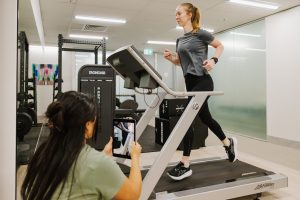
Research shows that runners naturally select a stride length that is close to their most energy-efficient pattern. In other words, your body tends to find a rhythm that allows you to run using the least amount of energy. Studies have found that even inexperienced runners instinctively choose a stride length that is remarkably close to their optimal one.
This is important because many runners assume that taking longer strides will make them faster. In reality, artificially changing your stride length can increase the energy cost of running and may even make you less efficient. While technique changes can sometimes be useful, there is rarely a one-size-fits-all approach.
That said, stride length can become relevant when injuries occur. Over-striding, where the foot lands too far in front of the body, has been associated with higher braking forces and increased stress through the knees and lower limbs. For runners dealing with recurring injuries, small adjustments to running mechanics may help reduce load on irritated tissues.
For most runners preparing for Run Melbourne, the Melbourne Marathon, or their next parkrun, the goal shouldn’t be to run like someone else. Instead, focus on building strength, managing training loads, and staying consistent. The most efficient stride is often the one your body has naturally developed.
If you’re experiencing pain, recurring injuries, or simply want confidence in your running technique, a physiotherapy running assessment can help determine whether any changes are likely to benefit you.
Click here to book your Running Analysis.